

Smart Money Concepts (SMC) Explained: A Complete Beginner’s Guide to Trading Like Institutions
Smart Money Concepts (SMC) is a trading method that helps you follow institutional footprints. Learn about liquidity, order blocks, fair value gaps, and how to trade like smart money in this complete guide.
Introduction: What Are Smart Money Concepts?
Smart Money Concepts (SMC) is a modern trading methodology designed to help you understand how large institutional players — banks, hedge funds, and market makers — move the markets . The core belief behind SMC is simple: price is manipulated by “smart money” to accumulate positions before large moves, and if you can track their footprints, you can ride their moves instead of getting trapped like retail traders .
Think of it like this:
- Retail trading is reacting to price
- SMC trading is predicting what price will want to do, based on smart money’s needs
Unlike traditional technical analysis that uses lagging indicators like RSI or MACD, SMC relies entirely on pure price action — reading the raw story of price movement, liquidity, and market structure .
The Core Principles of SMC
SMC builds around a few non-negotiable principles that form the foundation of the methodology .
1. Market Structure
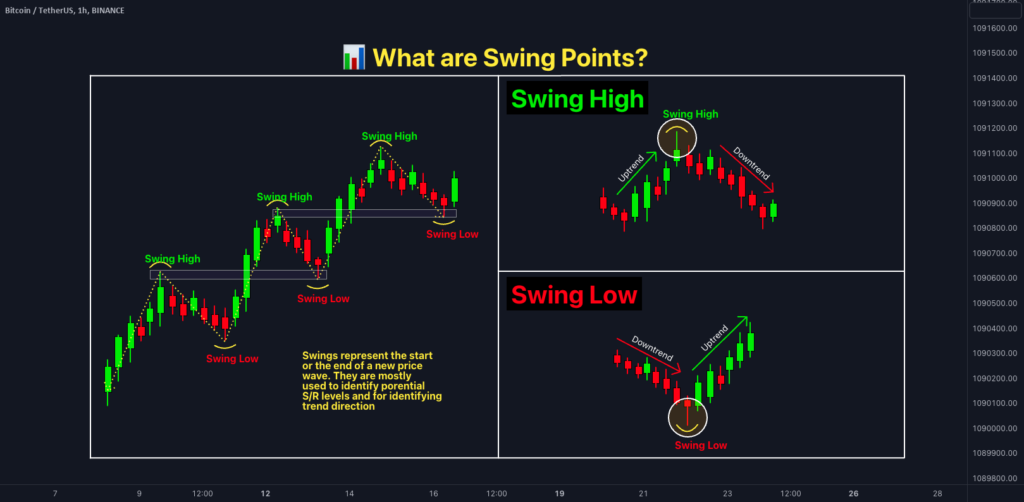
Market structure is the backbone of SMC. It identifies the direction of institutional order flow by tracking how price moves in swings .
| Structure Type | Definition |
|---|---|
| Bullish Structure | Higher Highs (HH) & Higher Lows (HL) |
| Bearish Structure | Lower Highs (LH) & Lower Lows (LL) |
- Break of Structure (BOS) : When price breaks a significant swing point in the direction of the trend — signaling a continuation
- Change of Character (CHoCH) : A shift in market bias — often the first sign of a trend reversal
Example: If price is in an uptrend and suddenly breaks a major low, this isn’t random selling. It’s likely a smart money signal that distribution has started .
2. Liquidity
Smart money hunts liquidity pools — areas where retail traders have concentrated stop-loss orders :
- Above recent highs → stop-losses of short sellers
- Below recent lows → stop-losses of long traders
Why does price often hit these levels? Because triggering these stops provides the volume big players need to enter large positions without causing huge slippage .
- Equal highs/lows (double tops/bottoms)
- Trendline liquidity (breakouts)
- Session highs/lows (London, New York, Asia)
3. Order Blocks
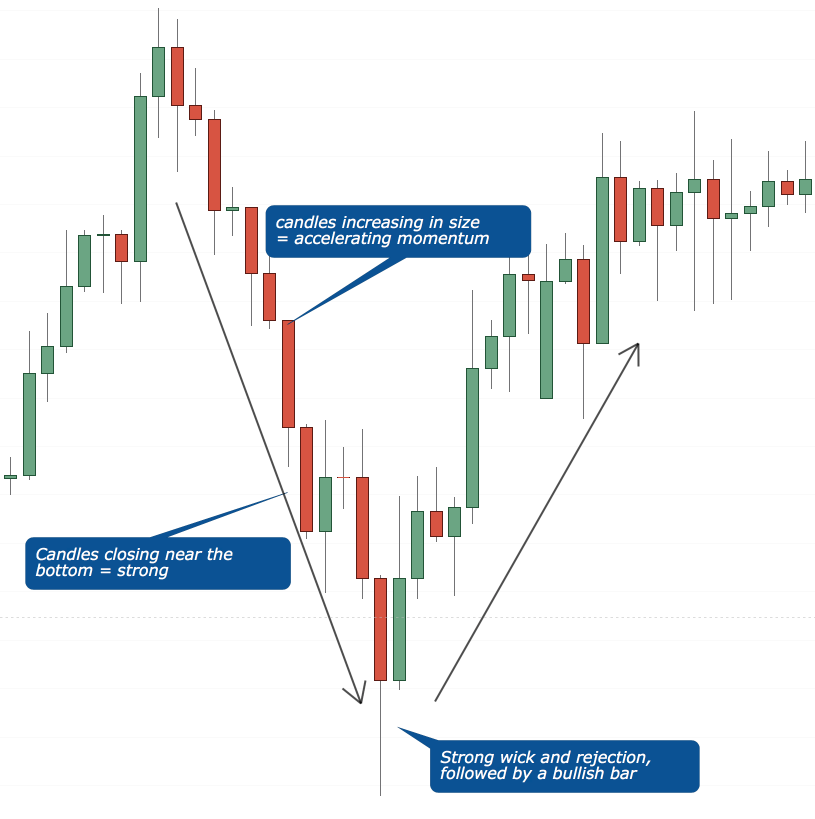
An Order Block (OB) is the last opposite candle before a strong impulsive move :
| Type | Definition |
|---|---|
| Bullish Order Block | The last bearish candle before a strong bullish push |
| Bearish Order Block | The last bullish candle before a strong bearish drop |
Order blocks are institutional footprints — zones where smart money likely placed big orders. Price often retraces to these OBs to “rebalance” before continuing .
4. Fair Value Gap (FVG)
Sometimes price moves so fast in one direction that it leaves a gap between candles’ wicks — meaning no trades happened in that range . This is called an imbalance or Fair Value Gap (FVG) .
- Bullish FVG: The gap between the high of the first candle and the low of the third candle in a strong upward move
- Bearish FVG: The gap between the low of the first candle and the high of the third candle in a strong downward move
Price often revisits these FVGs to “rebalance” the market before continuing .
5. Premium & Discount Zones
Using Fibonacci retracement, the 50% level divides the market into :
- Premium (above 50%) → expensive zone for buying, better for selling
- Discount (below 50%) → cheap zone for buying, better for selling
Smart money often buys at a discount and sells at a premium .
How Smart Money Operates
Retail traders believe price moves randomly — smart money knows better .
The Accumulation → Manipulation → Distribution Cycle
Markets cycle through three phases driven by institutional intentions :
| Phase | What Happens |
|---|---|
| Accumulation | Smart money quietly builds positions at low prices |
| Manipulation | Stop hunts and fake breakouts to mislead retail traders |
| Distribution | Price moves explosively in the intended direction |
Stop Hunts
Smart money deliberately pushes price to known liquidity areas — it looks like a breakout to retail traders but reverses right after. This traps breakout traders and activates their stops, providing liquidity .
Inducement
Before moving toward the main liquidity pool, smart money creates a “bait” level to attract retail orders. This induces traders to place stops exactly where smart money wants them . It’s a move that appears to invite traders into the wrong side before price reverses toward the real liquidity target .
SMC vs Traditional Technical Analysis
| Aspect | Traditional TA | SMC |
|---|---|---|
| Indicators | Uses RSI, MACD, Moving Averages | Pure price action |
| Focus | Patterns (Head & Shoulders, etc.) | Liquidity, order flow |
| Timing | Often late entries | Precision entries |
| Mindset | Follow trend | Follow smart money |
The SMC Trading Process: A Step-by-Step Guide
Here’s how to apply SMC principles to your trading :
Step 1: Higher Timeframe Bias
- Start from daily (D1) or 4H charts
- Identify market structure (uptrend, downtrend, or range)
- Mark major BOS and CHoCH points

Step 2: Identify Liquidity Pools
- Look for equal highs/lows, trendlines, swing points
- Mark where retail traders are likely trapped
- Mark external liquidity as targets
Step 3: Locate Order Blocks
- Find the last opposite candle before a strong move
- Confirm it aligns with your higher timeframe bias
Step 4: Watch for Imbalance (FVG)

Step 5: Entry Execution
- Drop to lower timeframes (15M, 5M, 1M) for refined entries
- Wait for a liquidity sweep, then displacement and a break of structure
Step 6: Risk Management
- Stop-loss just beyond the order block or liquidity sweep point
- Risk 1–2% per trade

Key SMC Entry Models
SMC traders use refined entry techniques to align with institutional order flow .
| Entry Model | Description |
|---|---|
| Liquidity Grab + CHOCH | Wait for a liquidity sweep (stop hunt), followed by a structure shift in the opposite direction — often signals a true reversal |
| Order Block Retest | Once a BOS occurs, price frequently returns to the last valid order block — a high-probability entry |
| FVG Mitigation | After a sharp move, wait for price to retrace partially into the imbalance zone before continuing |
Session Timing: When Smart Money Moves
Institutions trade based on global liquidity timings :
The London session creates some of the most predictable SMC sequences — the pattern often follows an Asian range, London sweep, displacement, then retrace entry .
Common Mistakes in SMC Trading
Avoid these pitfalls when applying SMC :
- Over-marking charts → clutter leads to confusion
- Forcing trades without waiting for confirmation
- Ignoring higher timeframe bias → trading against institutional direction reduces accuracy
- Not managing risk — precision doesn’t mean perfection
- Trading every liquidity grab — wait for confirmation via CHoCH or BOS
Psychology of SMC Trading
SMC can give very high risk-to-reward trades (1:5, 1:10), but the patience required can be tough .
Institutions exploit human behaviour. Most retail traders operate on fear and greed — placing stops too close, chasing breakouts, or trading without patience. SMC reverses this psychology :
| Emotion | Retail | Smart Money |
|---|---|---|
| Fear | Sells at bottoms | Buys when others panic |
| Greed | Buys at tops | Sells when others are euphoric |
| Reaction | Chases breakouts | Creates fake moves to manipulate emotions |
To succeed with SMC, you need: discipline to wait for setups, emotional detachment from market noise, and confidence to enter when it feels counterintuitive .
Why SMC Works
SMC works because it aligns your trading with the actual drivers of price — the big money . Institutions don’t react to news or candles emotionally — they engineer moves, and SMC teaches you to read that engineering .
- The market is a liquidity game
- Learn where smart money is likely to act
- Trade less, but with sniper precision
“Think like a lion hunting at a watering hole. It doesn’t run through the jungle hoping to bump into prey. It waits. It knows where the herd goes and strikes when it’s vulnerable. Smart money does the same with your stop losses. They wait where liquidity gathers and then enter with force.”
Frequently Asked Questions
What is Smart Money Concepts (SMC)?
SMC is a price action trading methodology that focuses on how institutional players move the market. It uses concepts like liquidity sweeps, order blocks, fair value gaps, and market structure to identify high-probability trades .
How is SMC different from traditional technical analysis?
SMC uses pure price action and focuses on institutional footprints like liquidity and order flow, while traditional TA relies on lagging indicators like RSI and MACD .
What is an Order Block in SMC?
An Order Block is the last opposite candle before a strong impulsive move. It represents where smart money likely placed large orders .
What is a Fair Value Gap (FVG)?
An FVG is a price imbalance left by aggressive institutional orders — a gap where no trading occurred. Price often revisits these gaps to “rebalance” .
What is a liquidity sweep in SMC?
A liquidity sweep occurs when price moves to a known liquidity pool (like stop-loss clusters above highs or below lows) to trigger retail stops, providing volume for institutions to enter positions .
Can beginners use Smart Money Concepts?
Yes, but SMC has a steep learning curve. Beginners should start by studying market structure, liquidity concepts, and one setup at a time — like liquidity sweep to BOS to FVG — and commit to mastering it .
Disclaimer: This article is for educational purposes only and does not constitute financial advice. Trading involves risk, including the potential loss of capital. Always consult a licensed financial advisor before making investment decisions.

