

US Jobs Report October 2026: NFP Results, USD & Gold Impact
The October 2026 US jobs report delivered a stronger-than-expected employment result, with non-farm payrolls increasing by 165,000 compared with market expectations of approximately 65,000. The unemployment rate stood at 4.1%, while average hourly earnings increased by 0.4% month on month.
Released on Friday, 6 November 2026, by the US Bureau of Labor Statistics (BLS), the latest employment figures provide an important update on the strength of the American economy and the Federal Reserve’s monetary policy outlook.
For forex and gold traders, the report is particularly important because changes in US employment, wage growth and interest-rate expectations can influence the US dollar, Treasury yields, XAU/USD and USD/ZAR.
Updated: 6 November 2026
The October result came in well above expectations. It also followed upward revisions to August and September employment figures, suggesting that the labour market was stronger than previously reported.
The initial market reaction included higher US Treasury yields and a stronger dollar, as investors reassessed the implications for Federal Reserve policy.
For South African traders, the key question is how the latest employment data could influence the US dollar, gold prices and the rand.
October 2026 US Jobs Report: Actual Results vs Expectations
The October employment report showed stronger payroll growth than economists had anticipated.
| Indicator | October Actual | Market Expectation | Previous Reading |
|---|---|---|---|
| Non-Farm Employment Change | +165,000 | Approximately +65,000 | +29,000 revised to +60,000 |
| Unemployment Rate | 4.1% | 4.2% | 4.2% |
| Average Hourly Earnings m/m | +0.4% | Approximately +0.3% | +0.1% |
| Average Hourly Earnings y/y | +3.1% | — | — |
Note: Published payroll forecasts varied between market previews. The approximately 65,000 expectation is based on the Reuters-reported economist forecast. The previous payroll figure shown is September’s revised result.
The US Bureau of Labor Statistics reported that non-farm payroll employment increased by 165,000 in October, compared with the average monthly gain of 48,000 over the previous 12 months.
The unemployment rate was 4.1%, while average hourly earnings increased by 0.4% during the month.
Previous employment figures were also revised higher:
- August payrolls increased from 133,000 to 186,000.
- September payrolls increased from 29,000 to 60,000.
- Combined upward revisions added 84,000 jobs to the previous estimates.
These revisions matter because they provide a stronger picture of employment growth over the preceding months.
What Is Non-Farm Employment Change?
Non-Farm Employment Change, commonly called Non-Farm Payrolls or NFP, measures the monthly change in employment across the US economy, excluding agricultural workers and certain other categories.
The indicator is published by the US Bureau of Labor Statistics and is closely monitored by forex traders, investors and financial institutions.
Employment provides an important indication of economic momentum. When businesses are hiring, it can suggest that demand remains healthy. When employment growth slows or turns negative, it may indicate that businesses are becoming more cautious.
However, traders should avoid treating the headline payroll figure as a standalone signal.
The market reaction depends on several factors:
- The difference between actual payroll growth and expectations.
- Changes in the unemployment rate.
- Average Hourly Earnings and wage inflation.
- Revisions to previous employment figures.
- Labour-force participation.
- The Federal Reserve’s assessment of inflation and economic growth.
The October report demonstrates why the entire release matters. Payroll growth exceeded expectations, wage growth accelerated and previous employment figures were revised higher.
October NFP Results: Why 165K Matters
The increase of 165,000 jobs was a substantial upside surprise compared with the approximately 65,000 expected in the Reuters-reported market forecast.
The result was also considerably higher than the average monthly employment gain of 48,000 recorded over the previous 12 months.
Three developments deserve particular attention.
1. Hiring was stronger than expected
Employers added 165,000 jobs during October. Professional and business services recorded the largest increase, adding 70,000 positions.
Healthcare and transportation and warehousing also recorded employment increases.
2. The unemployment rate remained relatively low
The unemployment rate stood at 4.1% in October, compared with 4.2% in September.
The BLS reported approximately 7.1 million unemployed people.
3. Previous employment figures were revised higher
August employment was revised upwards by 53,000 jobs, while September was revised upwards by 31,000.
Together, the revisions added 84,000 jobs to the previously reported August and September figures.
This is important because traders often focus on the latest headline number without considering whether previous estimates have changed.
Unemployment Rate: Why 4.1% Matters
The US unemployment rate was 4.1% in October, compared with 4.2% in September.
The unemployment rate measures the percentage of the labour force that is unemployed and actively looking for work.
The BLS reported that the number of unemployed people changed little at approximately 7.1 million.
The labour-force participation rate increased to 61.9%, while the employment-population ratio reached 59.3%.
The labour force itself increased by 421,000 people during October.
These figures provide additional context for the employment report. A lower unemployment rate can indicate improving labour-market conditions, but traders should also consider participation, employment levels and wage growth.
For the Federal Reserve, the overall labour-market picture is more important than one isolated unemployment reading.
Average Hourly Earnings: Why Wage Growth Matters
Average Hourly Earnings are another important component of the US employment report.
In October, average hourly earnings for private-sector employees increased by 14 cents, or 0.4%, to $38.00.
Over the previous 12 months, hourly earnings increased by 3.1%.
Wage growth matters because stronger earnings can support consumer spending and potentially contribute to inflationary pressure.
For the Federal Reserve, employment and wage data help provide information about the balance between economic growth and inflation.
The relationship traders are watching is:
Jobs → Wages → Inflation expectations → Federal Reserve policy → Treasury yields and USD → Gold and other markets.
This relationship is not automatic, but it helps explain why NFP can produce significant movements across financial markets.
What Does the October Jobs Report Mean for the US Dollar?
The US dollar is particularly sensitive to employment data because the report can influence expectations for future Federal Reserve interest-rate decisions.
Stronger employment growth can increase the possibility that the Federal Reserve maintains a restrictive monetary policy for longer, particularly when wage growth is also firm.
The October report delivered several factors that could support the dollar:
- Payroll growth significantly exceeded expectations.
- The unemployment rate was 4.1%.
- Monthly wage growth increased by 0.4%.
- Previous payroll figures were revised higher by a combined 84,000 jobs.
The initial market reaction reflected this stronger employment picture.
Reuters reported that the dollar index increased by approximately 0.7%, while US Treasury yields moved higher following the release.
Markets also increased the implied probability of a December Federal Reserve rate increase.
However, a stronger jobs report does not automatically mean the dollar will continue rising.
Markets also consider inflation, Federal Reserve communication, economic growth, global risk sentiment and what investors have already priced in.
The US dollar can therefore move differently from what the headline NFP figure initially suggests.
What Does the October Jobs Report Mean for Gold?
Gold traders closely monitor US employment data because XAU/USD is sensitive to movements in the US dollar, Treasury yields and interest-rate expectations.
Gold does not pay interest. When US Treasury yields rise, holding non-yielding assets such as gold can become less attractive relative to interest-bearing investments.
A stronger US dollar can also make dollar-priced gold more expensive for international buyers.
The October employment report could therefore create headwinds for gold if markets continue responding by pushing US yields and the dollar higher.
However, gold is influenced by several other factors, including:
- US real interest rates.
- Inflation expectations.
- Central-bank gold purchases.
- Geopolitical developments.
- Global investor demand.
- Movements in the US dollar.
- Broader financial-market uncertainty.
This means traders should not assume that stronger NFP figures automatically result in a sustained decline in gold.
The reaction of Treasury yields and the dollar following the release can help provide additional context.
NFP and XAU/USD: Three Market Scenarios Traders Should Understand
Although the October employment figures are now available, traders still need to assess how the market interprets the data and whether the initial reaction develops into a sustained trend.
Scenario 1: Strong Employment Supports the US Dollar
If investors interpret the 165,000 payroll increase and stronger wage growth as evidence of a resilient economy, the dollar could receive further support.
Potential market implications include:
- Stronger US dollar.
- Higher US Treasury yields.
- Reduced expectations for rapid monetary easing.
- Potential downward pressure on gold.
This scenario becomes more relevant if other economic indicators also point towards persistent inflation or strong economic activity.
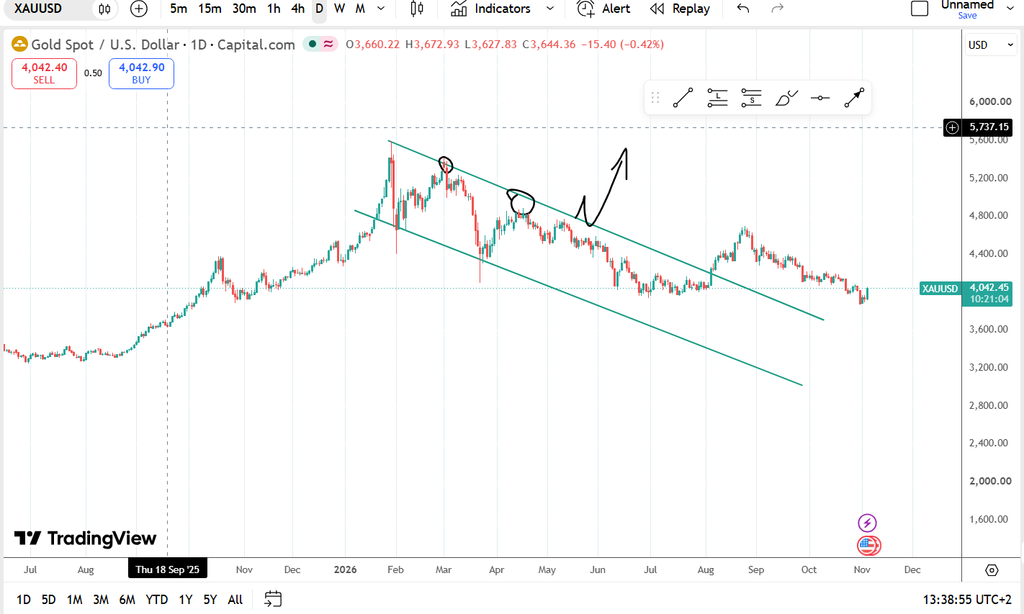
Scenario 2: Markets Focus on Broader Economic Weakness
Despite the stronger headline payroll figure, traders may focus on other labour-market indicators or future economic data that suggest employment conditions are becoming less robust.
If markets begin anticipating a softer economic outlook or lower interest rates, the dollar could weaken.
Potential implications include:
- Lower US Treasury yields.
- Reduced demand for the US dollar.
- Increased support for gold.
- Greater expectations of monetary easing.
The wider economic environment will determine whether this interpretation gains traction.
Scenario 3: Strong Employment but Changing Inflation Expectations
A strong employment report does not always produce a straightforward market reaction.
Traders must also consider wage growth, inflation data and Federal Reserve expectations.
If employment remains strong but inflation begins easing, the Federal Reserve could have more room to adjust monetary policy without necessarily maintaining the same degree of restriction.
This can create mixed signals for the dollar and gold.
The important lesson is that traders should analyse the full economic picture rather than relying on one employment number.
Why NFP Can Cause Significant Market Volatility
The US jobs report is one of the major economic releases capable of producing rapid movements across financial markets.
Following the release, traders typically monitor:
- US dollar currency pairs.
- Gold and silver.
- US Treasury yields.
- Equity indices.
- Commodities.
- Cryptocurrency markets.
The initial market reaction can be fast, particularly when the actual figures differ significantly from expectations.
Liquidity conditions can change around major economic announcements. Spreads may widen, prices can move rapidly and slippage can affect trade execution.
This is particularly important for traders using leverage.
A trading setup that appears attractive before an economic announcement can become invalid within seconds after the figures are released.
NFP Trading: What South African Traders Need to Know
For South African traders, US employment data is particularly relevant because it can influence both the US dollar and the rand.
The USD/ZAR currency pair is affected by changes in US monetary policy expectations, global risk sentiment and developments in South Africa’s domestic economy.
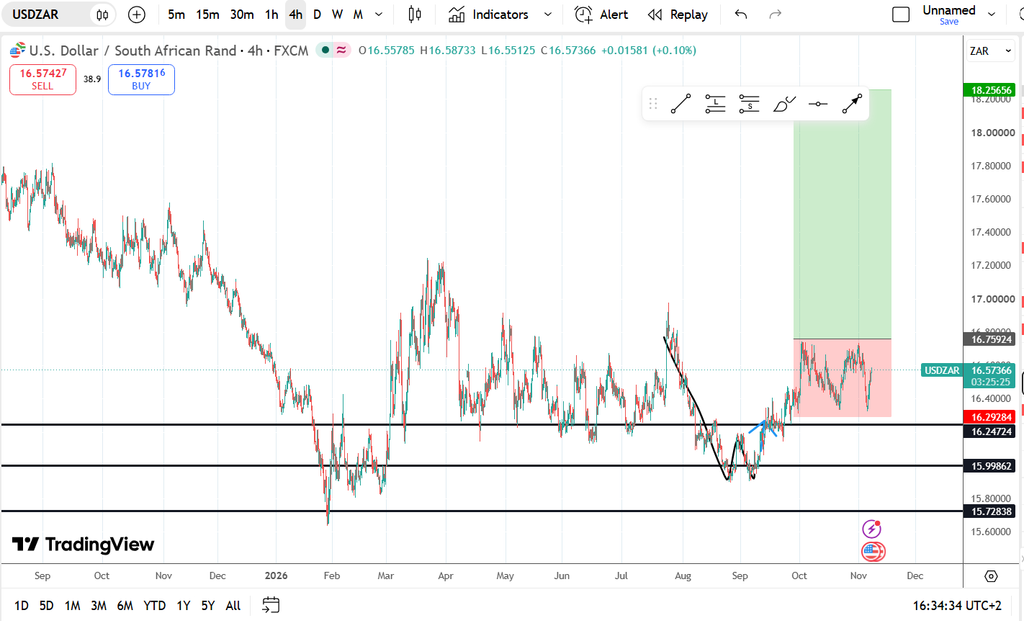
A stronger US dollar can place pressure on the rand and potentially push USD/ZAR higher.
A weaker dollar can provide support for the rand and potentially push USD/ZAR lower.
However, the rand has its own domestic and international drivers. South African interest rates, commodity prices, economic growth, political developments and global investor appetite can all influence the exchange rate.
Gold is another important market for South African investors and traders.
South Africa has a significant history as a gold-producing economy, and movements in international gold prices can influence sentiment around the local mining sector.
Traders in South Africa may therefore monitor:
- XAU/USD — Gold against the US dollar.
- USD/ZAR — US dollar against the South African rand.
- EUR/USD — Euro against the US dollar.
- GBP/USD — British pound against the US dollar.
- US stock-market indices.
The important point is that a move in gold does not necessarily mean the rand will move in the same direction. Each instrument should be analysed according to its own market drivers.
For additional context, read our guide to the best time to trade gold in South Africa.
How to Read the NFP Report Before Trading
Instead of looking only at the headline number, traders should examine five important areas.
1. Non-Farm Payrolls
Compare the actual employment change with economists’ expectations. A significant surprise can influence market expectations for economic growth and monetary policy.
2. Unemployment Rate
Check whether unemployment is increasing, declining or remaining stable. Consider the figure alongside labour-force participation.
3. Average Hourly Earnings
Examine monthly and annual wage growth. Stronger wages can influence inflation expectations and Federal Reserve policy.
4. Previous-Month Revisions
Check whether previous payroll figures have been revised higher or lower. Revisions can materially change the interpretation of employment trends.
5. Market Reaction
Monitor the US dollar and Treasury yields. Do not assume that the first price movement will continue in the same direction.
The October report demonstrated the importance of revisions, with August and September employment figures revised upwards by a combined 84,000 jobs.
Why Traders Should Wait for the First Reaction
One of the biggest mistakes around NFP is assuming that the first market movement represents the final direction.
Markets can initially react to the headline payroll number before traders fully assess unemployment, wage growth and previous-month revisions.
For example:
Headline: Strong payroll growth.
Initial reaction: US dollar strengthens.
Further analysis: Traders assess wage growth, inflation expectations and the Federal Reserve outlook.
Possible outcome: The dollar continues higher, consolidates or reverses depending on the wider market interpretation.
This is why some traders prefer to wait for the initial volatility to settle before looking for a technical setup.
There is no requirement to trade immediately after an NFP release. Sometimes the more useful opportunity comes after the market establishes a clearer direction.
NFP and the Federal Reserve: What Happens Next?
The Federal Reserve considers a broad range of economic information when making monetary policy decisions.
Employment data is important, but it is only one part of the overall picture.
The central bank also monitors:
- Inflation and consumer prices.
- Consumer spending.
- Economic growth.
- Wage growth.
- Labour-market conditions.
- Financial conditions.
- Broader economic risks.
The October jobs report delivered stronger employment growth than expected. The initial market response also showed that investors were reassessing the possibility of further Federal Reserve tightening.
The Federal Reserve’s policy outlook will depend on how employment data develops alongside upcoming inflation figures and other economic indicators.
For traders, the important question is whether the latest employment report changes expectations for future interest-rate decisions.
For more context, read our coverage of the Federal Reserve’s September 2026 rate decision.
What Happens After the October Jobs Report?
The employment report should not be viewed as the end of the analysis.
Traders should continue monitoring:
- Future revisions to payroll figures.
- US Consumer Price Index (CPI) data.
- Producer Price Index (PPI) data.
- Weekly unemployment claims.
- Federal Reserve statements.
- US Treasury yields.
- US dollar movements.
- The next monthly employment report.
The next US Employment Situation report, covering November 2026, is scheduled for Friday, 4 December 2026, at 8:30 a.m. Eastern Time.
For South African traders, that is scheduled for approximately 3:30 p.m. SAST.
The next report will provide another indication of whether the stronger October employment figures represent a sustained improvement or a temporary increase in hiring.
NFP Trading Strategy: Why Risk Management Matters
Trading around major economic releases carries additional risk because prices can move rapidly and liquidity conditions can change.
A trading strategy should include a clear risk-management plan before entering a position.
Traders should consider:
- Position sizing.
- Leverage.
- Stop-loss placement.
- Spread conditions.
- Potential slippage.
- Account risk.
- Whether a position is opened before or after the release.
A stop-loss does not guarantee an exact execution price during extreme market conditions because slippage can occur.
For newer traders, avoiding the initial NFP volatility may be more appropriate than attempting to predict the first market movement.
The objective should not be to trade every economic announcement. It should be to understand the data, assess market conditions and manage risk.
October 2026 US Jobs Report: Key Takeaways
The October employment report delivered a stronger result than economists had expected.
The most important figures were:
- 165,000: Actual non-farm payroll increase.
- Approximately 65,000: Reuters-reported market expectation.
- 4.1%: October unemployment rate.
- 0.4%: Monthly Average Hourly Earnings growth.
- 3.1%: Annual Average Hourly Earnings growth.
- 84,000: Combined upward revisions to August and September payrolls.
The report points to stronger employment growth than the initial September data suggested.
For forex and gold traders, the next step is to monitor how the data influences expectations for Federal Reserve policy, US Treasury yields and the dollar.
The October report is an important data point, but it should be assessed alongside inflation, economic growth and future employment figures.
Frequently Asked Questions About the US Jobs Report
What were the October 2026 US NFP results?
US employers added 165,000 non-farm jobs in October 2026, compared with market expectations of approximately 65,000 in the Reuters-reported economist forecast. The unemployment rate was 4.1%.
Did the October 2026 NFP report beat expectations?
Yes. The US economy added 165,000 jobs, substantially above the approximately 65,000 expected in the Reuters-reported forecast.
What was the US unemployment rate in October 2026?
The US unemployment rate was 4.1% in October 2026, compared with 4.2% in September.
How did Average Hourly Earnings perform in October 2026?
Average hourly earnings increased by 0.4% month on month to $38.00. Annual wage growth was 3.1%.
How did the previous US jobs figures change?
August payrolls were revised upwards from 133,000 to 186,000, while September payrolls were revised from 29,000 to 60,000. The combined upward revision was 84,000 jobs.
What happens to gold when NFP is stronger than expected?
Stronger-than-expected employment data can put pressure on gold if it supports the US dollar and pushes Treasury yields higher. However, gold is also influenced by real interest rates, inflation expectations, central-bank demand and geopolitical uncertainty.
Does NFP affect USD/ZAR?
Yes. US employment data can influence Federal Reserve expectations and the US dollar, potentially creating volatility in USD/ZAR. However, the rand is also affected by South African economic conditions, commodity prices and global risk sentiment.
What time is the US jobs report in South Africa?
The October 2026 report was released at 3:30 p.m. South African Standard Time on 6 November 2026. The next report is scheduled for approximately 3:30 p.m. SAST on 4 December 2026.
When is the next US jobs report?
The next US Employment Situation report, covering November 2026, is scheduled for Friday, 4 December 2026, at 8:30 a.m. Eastern Time.
Should you trade immediately after an NFP release?
Not necessarily. NFP can produce rapid price movements, wider spreads and slippage. Traders should assess the full report, monitor market conditions and follow an appropriate risk-management strategy.
Final Takeaway: Stronger US Employment Puts the Dollar and Gold in Focus
The October 2026 US jobs report surprised markets with a 165,000 increase in non-farm payrolls, well above the approximately 65,000 expected in the Reuters-reported forecast.
Unemployment stood at 4.1%, monthly wage growth accelerated to 0.4%, and previous employment figures were revised upwards.
For traders, the report provides important information about the resilience of the US labour market and the potential direction of Federal Reserve policy.
The US dollar, Treasury yields, gold and USD/ZAR remain important markets to monitor as investors assess the implications of the latest employment data.
However, NFP is only one part of the economic picture. Future inflation readings, Federal Reserve communication and additional labour-market data will help determine whether the October results signal a sustained improvement in US employment.
Official source: US Bureau of Labor Statistics – October 2026 Employment Situation.
Disclaimer: This article is for educational and informational purposes only and does not constitute financial advice or a recommendation to buy or sell any financial instrument. Trading forex, commodities and other leveraged financial products involves substantial risk of loss. Always conduct independent research and apply appropriate risk management.


