
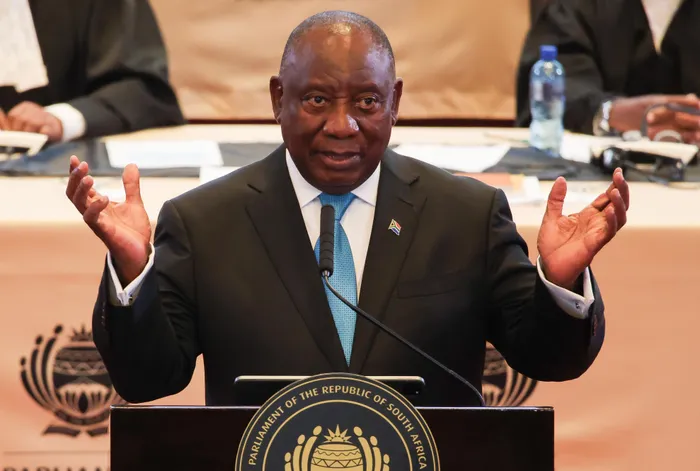
Ramaphosa Moves to Reshape Municipal Water and Electricity Services
South African municipalities could lose the automatic right to provide water and electricity under a proposed licensing system announced by President Cyril Ramaphosa, as government moves to tighten control over utility revenue and force greater investment in failing infrastructure.
The reforms, unveiled at the launch of the Revised White Paper on Local Government on October 22, 2026, would change how municipalities deliver essential services, who is permitted to operate utility networks, and how money collected from residents and businesses must be spent.
Under the proposed framework, water and electricity service providers would face compulsory licensing requirements, while revenue generated from utility sales would be ring-fenced to prioritise infrastructure maintenance.
The announcement comes as municipalities struggle with ageing infrastructure, unreliable water services, weak financial management and mounting debts to major suppliers, including Eskom.
For South African households, the central question is whether the reforms will result in more reliable services without placing additional pressure on already stretched budgets. For businesses and investors, the changes could reshape the country’s infrastructure investment landscape.
The policy framework has been approved by Cabinet, but implementation will require further action. The announcement does not mean that municipalities will immediately lose their service-delivery responsibilities or that household utility bills will automatically decrease.
What Ramaphosa’s Municipal Water and Electricity Reforms Mean
The revised White Paper proposes a different approach to municipal responsibilities, recognising that not every municipality has the technical expertise, financial resources or institutional capacity to manage every service effectively.
The main proposed changes include:
- Compulsory licensing: Water and electricity service providers would need to meet applicable licensing requirements.
- Ring-fenced utility revenue: Money collected from water and electricity sales would be protected for infrastructure maintenance and related service priorities.
- Separation of service authorities and providers: The responsibility for overseeing services could be separated from the organisations operating them.
- A differentiated municipal system: Responsibilities would be aligned more closely with municipalities’ ability to deliver services.
- Regional service delivery: Some functions could be delivered through regional structures, partnerships or concession arrangements where appropriate.
- A phased implementation programme: Government intends to coordinate the transition and determine how the proposed changes will be put into practice.
The broader objective is to improve accountability and ensure that essential services are managed by organisations capable of maintaining reliable infrastructure.
The government’s Revised White Paper on Local Government announcement provides the official context for the reform programme.
Why Is Government Changing the Way Municipalities Supply Utilities?
South Africa’s municipal infrastructure problems are not limited to a shortage of money. They also involve how existing revenue is collected, managed and spent.
Water systems require continuous maintenance of pipes, reservoirs, pumping stations and treatment facilities. Electricity distribution networks also need regular investment in substations, transformers, cables and other equipment.
When maintenance is neglected, small infrastructure problems can develop into expensive failures. Water leaks increase losses, damaged equipment causes interruptions, and emergency repairs can place additional pressure on municipal budgets.
The result can be a cycle in which municipalities struggle to maintain services while also facing rising operating costs and growing financial obligations.
Ramaphosa’s proposed reforms seek to address this problem by changing how utility revenue is managed and how service-delivery responsibilities are assigned.
Municipal debt remains a major concern
Municipal financial difficulties have consequences beyond local government.
When municipalities fail to pay electricity suppliers, water boards and other service providers, financial pressure can spread throughout the infrastructure system. Suppliers still need to maintain their networks and fund operations, even when customers owe substantial amounts.
At the launch of the revised White Paper, the municipal debt owed to Eskom was highlighted as a significant concern, with reported arrears exceeding R120 billion.
The government’s challenge is therefore twofold: municipalities must improve their ability to collect money owed to them, while ensuring that the revenue they receive is used to sustain essential services.
Ring-fencing utility income is intended to strengthen the link between what customers pay and the maintenance of the infrastructure they depend on.
What Does Ring-Fencing Water and Electricity Revenue Mean?
Ring-fencing means separating money collected for a particular purpose from funds available for other spending.
Under the proposed approach, revenue generated from water and electricity sales would be prioritised for maintaining the infrastructure used to provide those services.
For example, money collected through water bills could be directed towards repairing leaking pipes, maintaining reservoirs and upgrading pumping stations. Electricity revenue could support the upkeep of distribution networks and other essential infrastructure.
The idea is to reduce the risk that revenue intended to sustain utility services is used for unrelated municipal expenses while critical infrastructure deteriorates.
However, ring-fencing is not the same as guaranteeing that every municipality will have enough money to repair its infrastructure. The effectiveness of the policy will depend on revenue collection, financial controls, maintenance planning and enforcement.
It also does not automatically mean that consumers will pay less for water or electricity. Any effect on tariffs will depend on separate pricing decisions, operating costs, investment requirements and the applicable regulatory framework.
Will Municipalities Lose Control of Water and Electricity?
The proposed licensing system could change how some municipalities provide utilities, but it is important to distinguish between a municipality’s responsibility for a service and the organisation that physically delivers it.
Under the proposed model, a municipality could retain responsibility for ensuring that residents receive a service while an appropriately licensed provider operates the relevant infrastructure.
Depending on the final arrangements, service delivery could involve municipal utilities, regional providers, partnerships or concession agreements.
Where a municipality lacks the capacity to perform a particular function, the policy envisages that responsibility could be assigned elsewhere rather than allowing service failures to continue indefinitely.
The final impact will depend on the licensing requirements, relevant legislation, institutional arrangements and transition decisions.
Residents should not assume that their existing electricity distributor or water supplier will change immediately. The reforms still need to be translated into practical implementation measures.
What the Reforms Could Mean for South African Businesses and Investors
For InvestInSA readers, the economic significance extends beyond municipal administration.
Reliable water and electricity are essential for industrial production, commercial property, agriculture, retail, hospitality, mining and technology businesses. When utility services are unreliable, companies may face higher operating costs, interruptions to production and uncertainty about future expansion.
If the reforms improve infrastructure management and service reliability, they could strengthen the conditions needed for private-sector investment.
1. Potential opportunities in infrastructure
A stronger focus on maintenance could increase demand for companies involved in:
- Water treatment and distribution infrastructure.
- Pipeline repairs, pumping systems and reservoir maintenance.
- Electricity distribution equipment and network upgrades.
- Smart meters, billing systems and revenue management.
- Infrastructure engineering, maintenance and technical services.
These are potential areas of demand, not guaranteed investment opportunities. Commercial outcomes will depend on procurement rules, funding, licensing arrangements and whether projects can generate sustainable returns.
2. Municipal financial health could affect investment confidence
Businesses consider more than headline economic growth when deciding where to invest.
They also assess whether a location has reliable utilities, functioning infrastructure, predictable operating conditions and credible public institutions.
If the reforms help municipalities maintain essential services and manage revenue more effectively, they could make some areas more attractive for business expansion.
However, implementation failures or continued municipal financial distress could limit those benefits.
3. Infrastructure investment could become more targeted
The proposed changes may encourage greater focus on maintaining existing infrastructure before committing resources to new projects.
That could create opportunities for businesses specialising in repairs, network upgrades, water efficiency and utility management.
For investors, the important question is whether the policy leads to funded projects, transparent procurement and measurable improvements rather than simply announcing new structures.
Could South Africans Pay More for Water and Electricity?
The licensing and ring-fencing proposals do not, on their own, determine whether tariffs will rise or fall.
In the short term, consumers may continue to face the effects of existing infrastructure problems, operating costs and municipal financial pressures.
Over the longer term, better maintenance could reduce some emergency repair costs and improve service reliability. But infrastructure upgrades require funding, and the way those costs are recovered will matter to households and businesses.
There is also a risk that poorly implemented reforms could create additional administrative costs or uncertainty during the transition.
The outcome will depend on how licensing is designed, how providers are regulated, how infrastructure is funded and whether municipal financial management improves.
The key test is not whether the system changes on paper, but whether residents receive more reliable services and can understand how their utility payments are being used.
What Happens Next?
Cabinet approved the Revised White Paper on Local Government in September 2026, and the October 22 launch marked a further step towards implementation.
Government has indicated that a time-bound Transition Management Body and a coordinated implementation programme will guide the process, with the Department of Cooperative Governance, The Presidency and National Treasury involved.
The next developments to watch include:
- The detailed implementation plan and transition timetable.
- Legislation and regulations needed to establish licensing requirements.
- How service authorities and service providers will be separated.
- How ring-fenced revenue will be monitored and enforced.
- Which municipalities may need alternative service-delivery arrangements.
- How the changes will affect tariffs, municipal budgets and infrastructure investment.
These details will determine whether the proposals result in meaningful improvements or remain another layer of policy without a measurable impact on service delivery.
What Investors Should Watch
Investors should monitor implementation rather than treating the announcement as an immediate commercial opportunity.
The most useful indicators will include municipal financial statements, revenue collection, supplier arrears, infrastructure maintenance spending, procurement transparency and actual improvements in water and electricity reliability.
Companies operating in utility infrastructure may benefit if the reforms lead to properly funded maintenance and upgrade programmes. However, project announcements alone do not establish that a contract will be awarded or that a business will earn a profit.
For the wider South African economy, more reliable utilities could reduce business disruption and support investment. Whether that happens will depend on execution, accountability and the ability to turn policy into functioning infrastructure.
Final Word
Ramaphosa’s proposed municipal reforms aim to change the way South Africa manages water and electricity services by introducing compulsory licensing, protecting utility revenue and reconsidering which institutions should deliver essential services.
The proposals address a fundamental economic problem: infrastructure cannot remain reliable if the money and expertise needed to maintain it are consistently lacking.
For households, the priority is dependable water and electricity. For businesses, it is predictable operating conditions. For investors, it is evidence that municipal infrastructure can be managed and maintained sustainably.
The policy creates a framework for change, but its success will ultimately be measured by whether South Africans experience fewer service interruptions, stronger municipal finances and better-maintained infrastructure.
InvestInSA analysis: The investment story is not simply who will control municipal utilities. It is whether the reforms can restore the financial and operational foundations needed to keep South Africa’s essential infrastructure working.
This article is for general information and does not constitute financial or investment advice.

